Porto-Novo, Bénin
Porto-Novo
Porto-Novo is a port city and the capital of Benin, in West Africa. It’s known for colonial buildings like the Brazilian-style Great Mosque, formerly a church.

Porto-Novo

Porto-Novo is a port city and the capital of Benin, in West Africa. It’s known for colonial buildings like the...

10 Best Places to Visit in Benin | Travel Video | Travel Guide | SKY Travel
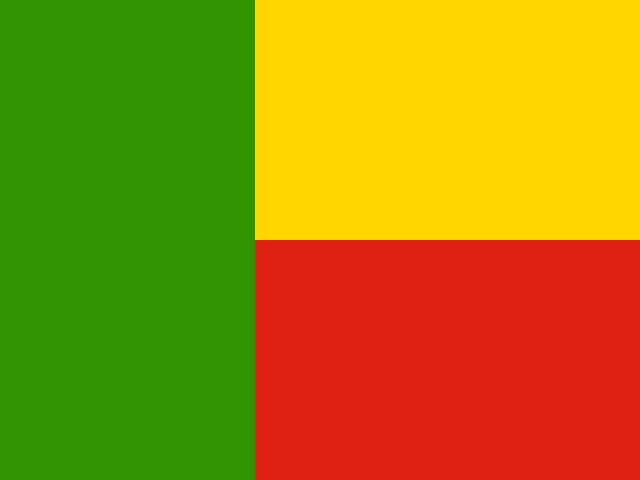
Benin flag

Benin Travel Information

Temp icon
Overview icon

Key facts

Capital:

Porto-Novo (constitutional capital); Cotonou (seat of government)

Location:

Western Africa, bordering the Bight of Benin, between Nigeria and Togo

Currency:

Communaute Financiere Africaine francs (XOF)

Area:

112,622 sq km

Population:

13,301,694 (July 2021 est.)

Languages:

French (official), Fon and Yoruba (most common vernaculars in south), tribal languages (at least six major ones in north)

Religion:

Muslim 27.7%, Roman Catholic 25.5%, Protestant 13.5% (Celestial 6.7%, Methodist 3.4%, other Protestant 3.4%), Vodoun 11.6%, other Christian 9.5%, other traditional religions 2.6%, other 2.6%, none 5.8% (2013 est.)

TimeZone:

UTC+1

Tel Code:

+229

Things to Do

  • 1. Visit Ganvie Village

    Take a boat tour of the largest lake village in Africa. Explore the unique stilted houses and experience the local culture and way of life.

  • 2. Explore Ouidah Slave Route

    Follow the historic slave route in Ouidah and visit the various points of interest, including the Point of No Return, the Door of No Return, and the Voodoo Temple.

  • 3. Discover Pendjari National Park

    Embark on a safari adventure in Pendjari National Park and spot a wide variety of wildlife, including elephants, lions, hippos, and antelopes.

  • 4. Visit Royal Palaces of Abomey

    Step back in time and explore the UNESCO World Heritage Site of the Royal Palaces of Abomey. Learn about the history of the Dahomey Kingdom and see the magnificent palaces.

  • 5. Experience Somba Village

    Immerse yourself in the traditional Somba culture by visiting a Somba village. Learn about their architecture, way of life, and traditional practices.

  • 6. Relax on Grand-Popo Beach

    Unwind on the beautiful sandy beaches of Grand-Popo. Enjoy the peaceful atmosphere, indulge in water activities, and witness stunning sunsets.

  • 7. Visit W National Park

    Explore the diverse ecosystems of W National Park, which spans across Benin, Niger, and Burkina Faso. Discover a wide range of wildlife, including elephants, buffalos, and birds.

  • 8. Discover Taneka Village

    Experience the traditional way of life in Taneka Village. Interact with the friendly locals, learn about their customs and traditions, and admire the beautiful landscape.

  • 9. Explore Cotonou

    Discover the vibrant city of Cotonou and visit its various attractions, including the Dantokpa Market, the Fidjrosse Beach, and the Oba's Palace.

  • 10. Visit Porto-Novo

    Explore the capital city of Benin, Porto-Novo. Visit the Royal Palace, the Ethnographic Museum, and the Sacred Forest of Osun.

Weather

Climate in Benin

Benin has a tropical climate, with two main seasons: the rainy season and the dry season. The rainy season, which runs from April to July, is characterized by heavy rainfall and high humidity. The dry season, which runs from October to March, is the best time to visit Benin as it is characterized by sunny weather and low humidity.

Temperature

Temperatures in Benin are generally high throughout the year, with average temperatures ranging from around 25-30 degrees Celsius (77-86 degrees Fahrenheit) during the dry season and around 27-32 degrees Celsius (81-90 degrees Fahrenheit) during the rainy season.

Best time to visit Benin

The best time to visit Benin is during the dry season, which runs from October to March, as the weather is sunny and dry, and it is the perfect time to enjoy outdoor activities such as hiking, safari, and beach relaxation. However, you should keep in mind that it is also the peak tourist season, so you may find that prices are higher and some of the most popular sites can be quite crowded. It's important to note that Benin is located in the equatorial zone, which means that there is a high level of humidity throughout the year, and even during the dry season, visitors should expect some rain. Additionally, the rainy season is also a good time to visit Benin if you want to experience the lush greenery of the rainforests, but keep in mind that it can be quite hot and humid during this time of the year.

Food

Accommodation

Hotels

Benin offers a wide range of accommodation options, including hotels, resorts, and guesthouses. Hotels in Benin are generally of a good standard, and there are options available to suit all budgets. Many hotels in Benin are located in the capital, Cotonou, and other major cities such as Porto-Novo, Ouidah and Natitingou.

Guesthouses

Guesthouses are another popular option for accommodation in Benin. These are often family-run and offer a more authentic and local experience. Guesthouses are often less expensive than hotels and resorts and can be a great option for budget-conscious travelers.

Resorts

Benin is home to several resorts, including beach resorts, which are mainly located in the coastal areas. These resorts offer more luxurious accommodation options and are often equipped with amenities such as swimming pools, restaurants, and spas. They are perfect for travelers looking for relaxation and luxury while enjoying the beach.

Campsites

Benin also offers several camping sites, mainly located in the national parks and protected areas. This option is perfect for nature enthusiasts and travelers who want to explore Benin's nature and wildlife. They generally offer basic facilities such as toilets, showers and fireplaces, and travelers need to bring their own camping gear.

Transportation

Public transportation

In Benin, the most common form of public transportation is the shared taxi, also known as "zemidjan", which is a minivan that runs on fixed routes and stops at designated locations. This can be a good option for getting around the cities, but keep in mind that it can be quite crowded and uncomfortable during peak hours. Additionally, local buses are available in major cities, but are not as frequent and reliable as the shared taxis.

Private transportation

Another option for transportation in Benin is to hire a private taxi or car. This is a more comfortable and convenient option, but it is also more expensive. Private taxis can be found at major hotels and airports, and it is recommended to negotiate the fare before starting your trip.

Motorcycles and bicycles

Motorcycles and bicycles are also popular options for transportation in Benin, especially for shorter trips and for exploring smaller towns and villages. They can be rented at several locations and are a good way to avoid traffic congestion and explore the country's landscape and culture.

Air transportation

Benin has several airports, the main one is the Cadjehoun Airport located in Cotonou and serves several destinations in Africa and Europe. This is a convenient option for travelers who want to save time and avoid long road trips. Benin's main airlines, Air Benin and ASKY airlines, cover several destinations within Benin as well as to some neighboring countries like Togo, Ghana, Burkina Faso, and others.

Money

Currency

  • The currency of Benin is the West African CFA franc (XOF).

Cash And Cards

  • Credit cards are accepted in some hotels, restaurants, and businesses in larger cities.
  • It's best to carry cash in small denominations for daily expenses.
  • ATMs are available in major cities but may be limited in remote areas.

ATMs

  • ATMs are available in major cities but may be limited in remote areas.

Tipping

  • Tipping is not customary in Benin.

Cost Of Living

  • The cost of living in Benin is relatively low compared to Western countries.
  • Accommodation, transportation, and food are generally affordable.

Scams

  • Be cautious of scams involving counterfeit currency.
  • Avoid giving money or goods to beggars, as it may attract more beggars or contribute to a cycle of dependency.