Bagan, Myanmar (Barma)
Bagan
The Shwezigon Pagoda or Shwezigon Paya is a Buddhist stupa located in Nyaung-U, Myanmar. A prototype of Burmese stupas, it consists of a circular gold leaf-gilded stupa surrounded by smaller temples and shrines.

Bagan

The Shwezigon Pagoda or Shwezigon Paya is a Buddhist stupa located in Nyaung-U, Myanmar. A prototype of...

Inle Lake, Myanmar (Burma)
Inle Lake
The art of fishing with one leg paddling.

Inle Lake

The art of fishing with one leg paddling.

Early morning Bagan, Myanmar
Bagan
Early morning chats in Bagan

Bagan

Early morning chats in Bagan

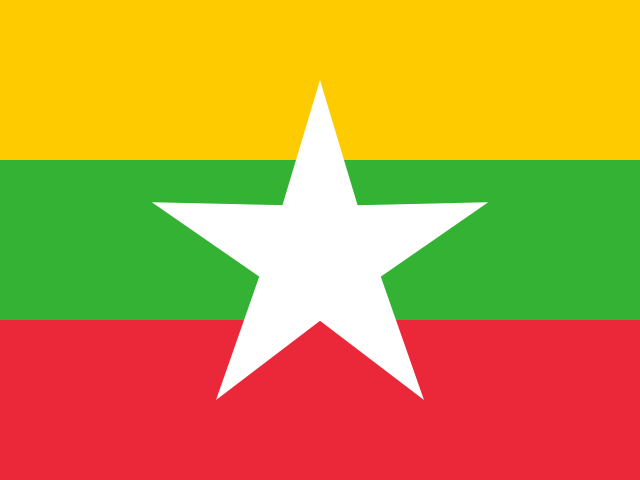
Myanmar flag

Myanmar Travel Information

Temp icon
Overview icon

Key facts

Capital:

Naypyidaw

Location:

Southeastern Asia, bordering the Andaman Sea and the Bay of Bengal, between Bangladesh and Thailand

Currency:

kyats (MMK)

Area:

676,578 sq km

Population:

57,069,099 (July 2021 est.)

Languages:

Burmese (official)

Religion:

Buddhist 87.9%, Christian 6.2%, Muslim 4.3%, Animist 0.8%, Hindu 0.5%, other 0.2%, none 0.1% (2014 est.)

TimeZone:

UTC+6.5

Tel Code:

+95

Things to Do

  • 1. Bagan Temples

    Explore the ancient temples of Bagan, a UNESCO World Heritage Site. Marvel at the architecture and intricate carvings.

  • 2. Inle Lake

    Take a boat ride on Inle Lake and witness the unique floating gardens, traditional fishing techniques, and stilt houses.

  • 3. Golden Rock

    Visit the Golden Rock, a sacred Buddhist pilgrimage site. Witness the gravity-defying rock balancing on the edge of a cliff.

  • 4. Shwedagon Pagoda

    Experience the awe-inspiring Shwedagon Pagoda, a golden masterpiece and a symbol of Myanmar's cultural heritage.

  • 5. U Bein Bridge

    Walk along the teakwood U Bein Bridge, the world's longest teak bridge, and enjoy the stunning sunset views over Taungthaman Lake.

  • 6. Mandalay Hill

    Climb up Mandalay Hill to enjoy panoramic views of the city and visit the sacred Sutaungpyai Pagoda at the hilltop.

  • 7. Yangon Circular Train

    Take a ride on the Yangon Circular Train and experience the local way of life while passing through neighborhoods and markets.

  • 8. Mrauk U

    Discover the ancient city of Mrauk U, known for its impressive archaeological ruins and historical temples.

  • 9. Mount Popa

    Hike up to Mount Popa, a volcanic peak with a sacred shrine dedicated to the 37 nats (spirits) of Myanmar.

  • 10. Mahamuni Buddha Temple

    Visit the Mahamuni Buddha Temple and witness the daily ritual of applying gold leaf to the revered Mahamuni Buddha statue.

Weather

Myanmar, also known as Burma, is a country located in Southeast Asia that has a tropical monsoon climate, with three main seasons:

  • the rainy season from May to October
  • the cool season from November to February
  • the hot season from March to April

Rainy season

The rainy season, from May to October, is characterized by heavy rainfall, high humidity, and flash floods in some areas. This is not the best time to visit Myanmar for those who want to enjoy outdoor activities or sightseeing, but it's a good time for those who want to experience the country's lush, green landscapes.

Cool season

The cool season, from November to February, is the most popular time to visit Myanmar. The weather is dry, mild, and comfortable, making it perfect for outdoor activities and sightseeing. The skies are clear, and the visibility is good, which makes it a great time to visit the country's many temples and historic sites.

Hot season

The hot season, from March to April, is characterized by high temperatures and humidity. The weather can be quite uncomfortable, making it less favorable for outdoor activities or sightseeing.

In general, the best time to visit Myanmar is from November to February, when the weather is dry, mild, and comfortable, making it perfect for outdoor activities and sightseeing. However, it's always worth checking the weather forecast for the specific regions you plan to visit, as the weather can vary depending on the location.

Food

Accommodation

Myanmar, also known as Burma, is a country that has been historically isolated, which has led to a relatively underdeveloped tourism industry. However, there are still several accommodation options available for travelers, including:

Hotels

Myanmar has a wide range of hotels, from budget guesthouses to luxury resorts. Prices vary depending on the level of comfort and service you require. In the main tourist areas, such as Yangon, Bagan, and Inle Lake, you'll find a good selection of mid-range and luxury hotels.

Guesthouses

Guesthouses are a popular and affordable accommodation option in Myanmar. They are generally small, family-run establishments that offer basic rooms and facilities. Guesthouses can be found in most towns and cities, and they are a great way to experience the local way of life.

Hostels

Hostels are a budget-friendly accommodation option, and are more common in the main tourist areas and cities. They usually offer dormitory-style accommodation and shared facilities, and they can be a great way to meet other travelers.

Homestays

Homestays are a great way to experience the local culture and way of life in Myanmar. They are often located in remote or rural areas and offer a chance to stay with a local family and learn about their daily life.

Resorts

Myanmar has a growing number of luxury resorts, many of which are located in remote and scenic locations. These resorts offer a high level of comfort and service, and they are perfect for those looking for a more upscale experience.

Camping

Camping is not a common option for travelers in Myanmar, and there are few facilities available for camping. It's not a recommended option.

It's important to note that accommodation options may vary depending on the specific location you are visiting in Myanmar, and it's always a good idea to check the availability of accommodation options before you travel.

Transportation

Myanmar, also known as Burma, is a country located in Southeast Asia that has been historically isolated, which has led to a relatively underdeveloped transportation infrastructure. However, there are still several transportation options available for travelers.

Bus

Buses are one of the most common and affordable ways to get around Myanmar. They connect most major towns and cities and are a good option for long-distance travel. However, the buses can be old, overcrowded, and in poor condition, and the roads can be in bad shape, so the journey can be bumpy and uncomfortable.

Train

Trains are another popular option for getting around Myanmar. They connect most major towns and cities and offer a more comfortable way to travel than buses. The trains can be slow, but they provide a great way to see the country's beautiful scenery.

Plane

There are several domestic airlines that connect major cities and tourist destinations. This is one of the most convenient options for long-distance travel, but it's also the most expensive.

Boat

Boats are an essential transportation option in Myanmar, especially when traveling through the Irrawaddy River. There are many different types of boats available, from slow boats to speedboats, and they can be a great way to explore the remote areas of Myanmar and see the local way of life.

Motorbike or Scooter

Renting a motorbike or scooter is a popular option for travelers who want to explore Myanmar at their own pace, but it can be dangerous due to poor road conditions and lack of safety regulations.

It's important to note that transportation options may vary depending on the specific location you are visiting in Myanmar, and it's always a good idea to check the availability of transportation options before you travel.

Money

Currency

  • The currency in Myanmar is the Burmese kyat.
  • Currency exchange can be done at banks, hotels, and authorized money changers.
  • US dollars are widely accepted in tourist areas, but it is recommended to carry small denominations.

Cash And Cards

  • It is advisable to carry enough cash, especially when traveling to remote areas, as credit cards and ATMs may not always be accepted.
  • Visa and Mastercard are the most widely accepted credit cards in tourist areas.
  • It is always good to inform your bank about your travel plans to avoid any issues with your cards.

ATMs

  • ATMs are widely available in major cities and tourist areas in Myanmar.
  • However, it is recommended to carry enough cash when traveling to remote areas where ATMs may be limited or unavailable.
  • It is also advisable to carry small denominations as ATMs may dispense larger notes.

Tipping

  • Tipping is not a customary practice in Myanmar.
  • However, it is becoming more common in tourist areas.
  • If you receive exceptional service, you can consider leaving a small tip, but it is not obligatory.

Cost Of Living

  • Myanmar is a relatively affordable country for travelers.
  • Accommodation, transportation, and meals are generally inexpensive.
  • However, prices may vary depending on the location and level of luxury.

Scams

  • Be cautious of unofficial money changers who offer better exchange rates on the street.
  • It is recommended to exchange money at authorized money changers or banks to avoid scams.
  • Be cautious of pickpockets in crowded areas and keep your belongings secure at all times.